Most farmers sell dried cherry before it is hulled
Farmers sell the dried whole cherry, called kiboko, to a trader. A mill strips the husk, and the green bean goes on to exporters. In 2002 to 2004 a farmer's profit on traditional Robusta kiboko was about 85 shillings a kilo, and "Selling FAQ coffee is more worthwhile than kiboko", the study notes, FAQ being the hulled bean. Processing near the farm can move some of that value to the village, if the machines work and a buyer pays for quality.
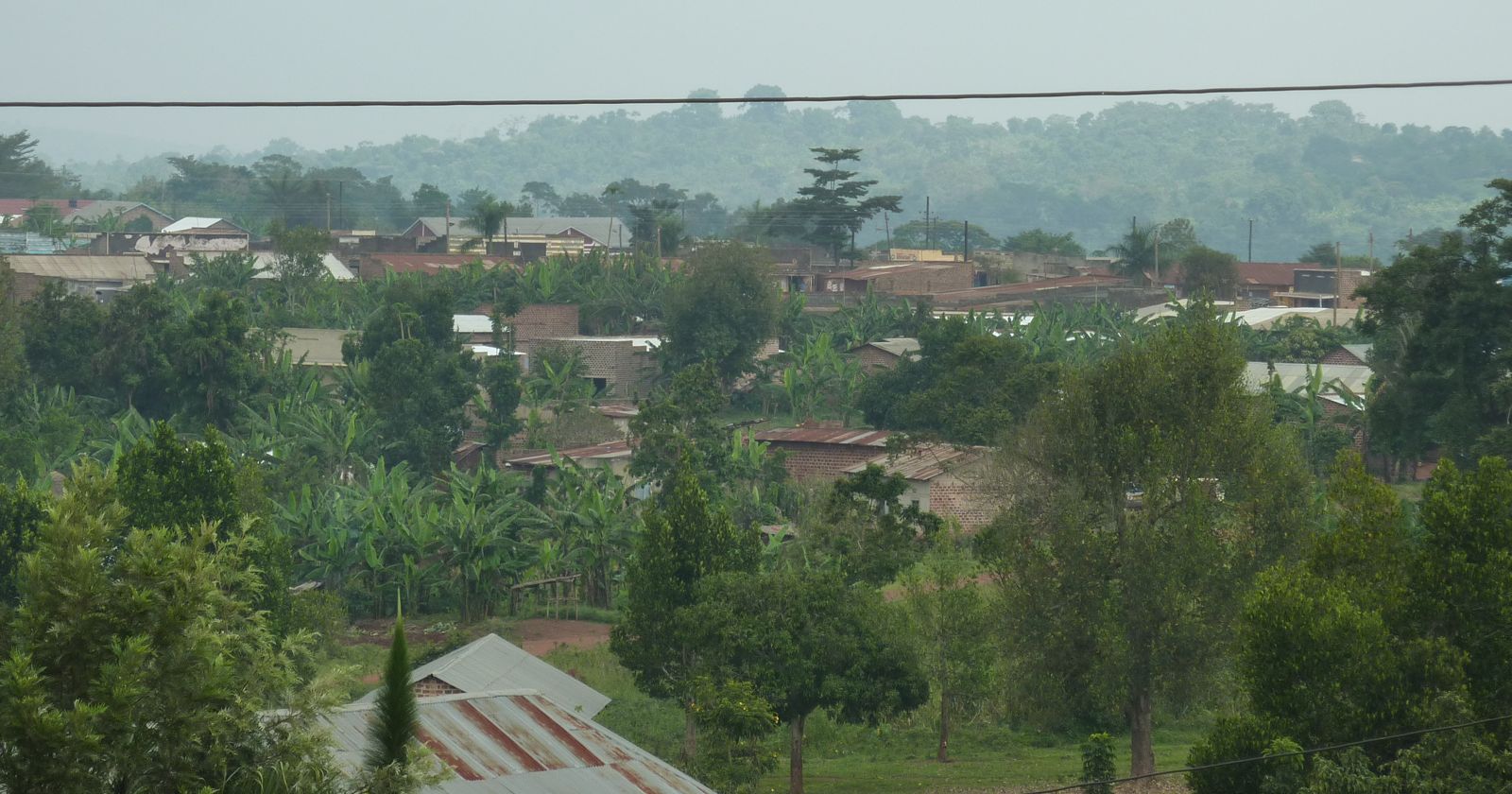
Cheyns, Mrema and Sallée, Socio-economic study of the Ugandan coffee chain, CIRAD for the FAO, May 2006, pages 6, 22 to 23 and 47 (profit figures from the Uganda Coffee Development Authority). Placements: EWB-UK proposals and letters, 2009 to 2013.
Follow a cherry
Four steps, and what the volunteers designed for each. Tap a step.
The usual way: dry the whole cherry
Most Ugandan Robusta is dried as whole cherries. Among the farmers the FAO study surveyed in Masaka District, almost two thirds dried their coffee on bare ground only, and at least half dried it for 7 to 10 days, some for up to 25. Slow drying lets moulds grow. The FAO project behind the study began because the EU set out to cap one mould toxin, ochratoxin A, in green coffee, and the study's advice was to dry coffee to 14% moisture as quickly as possible.
CIRAD for the FAO, 2006, pages 5 to 7 and 60 to 61.
The wet route starts fast
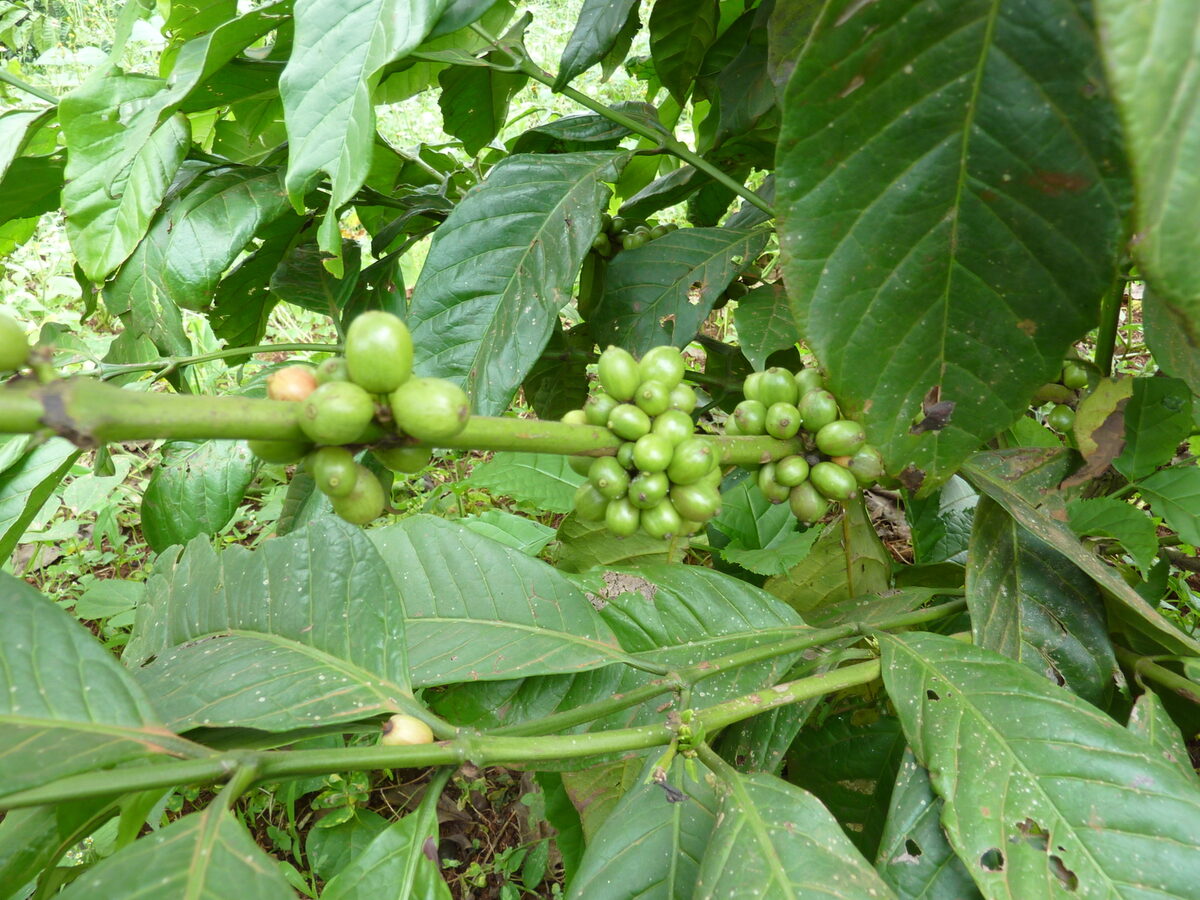
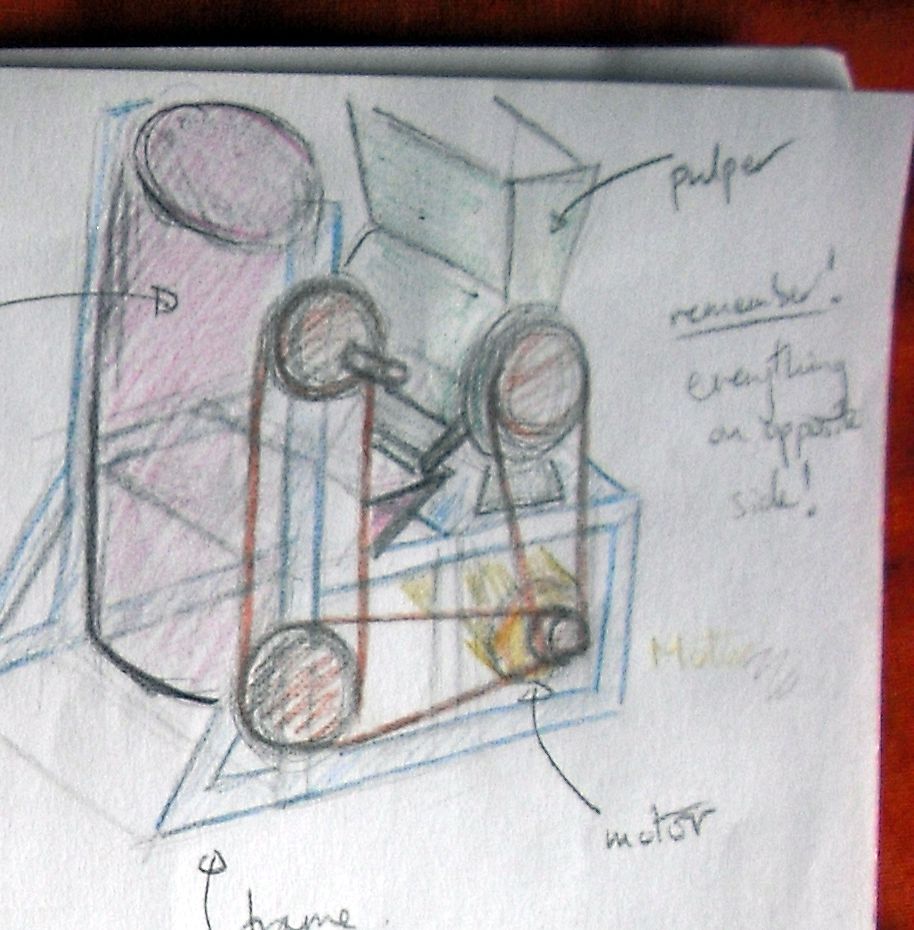
Wet processing begins by stripping the red skin and pulp off ripe cherries, and it has to happen within 8 to 10 hours of picking. In 2007 Lee and RASD tested a nut sheller on fresh coffee at RASD. The volunteers' sketch puts a pulper and a demucilager on one frame, driven by one motor through belts, so both steps could run on one machine.
CIRAD for the FAO, 2006, page 47. Lee's 2007 letter to the J.W. Saxe Memorial Fund. Volunteers' design sheet, undated (2011 or 2012).
A hand-turned demucilager
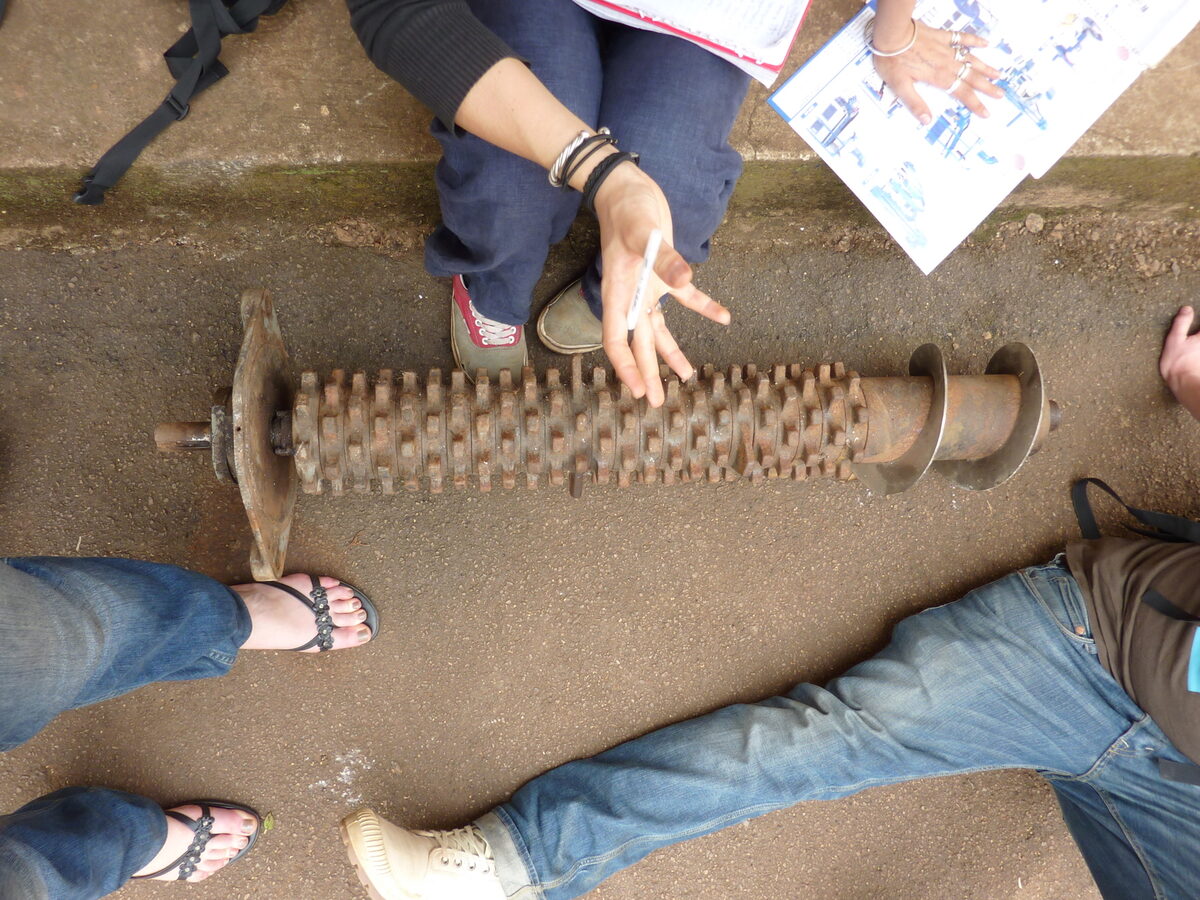
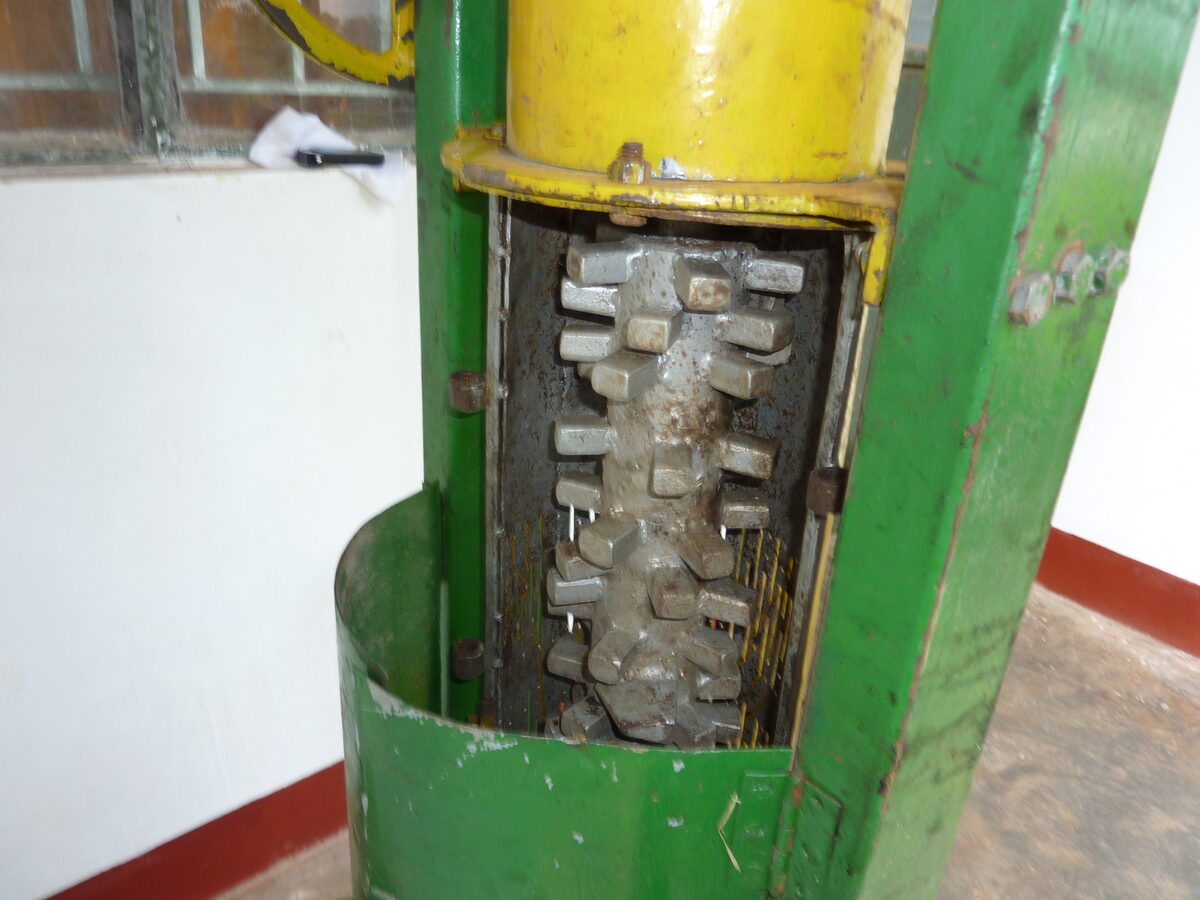
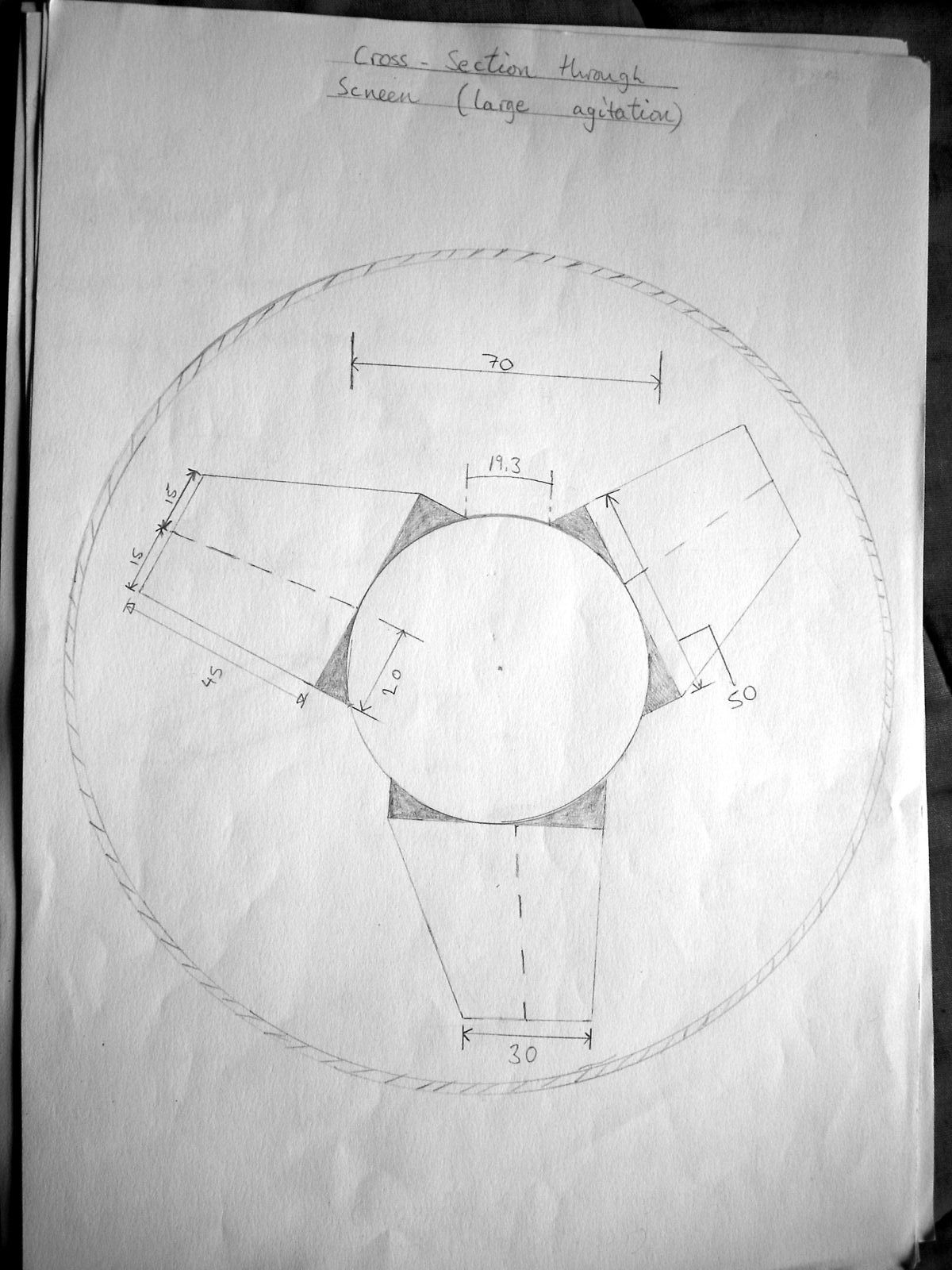
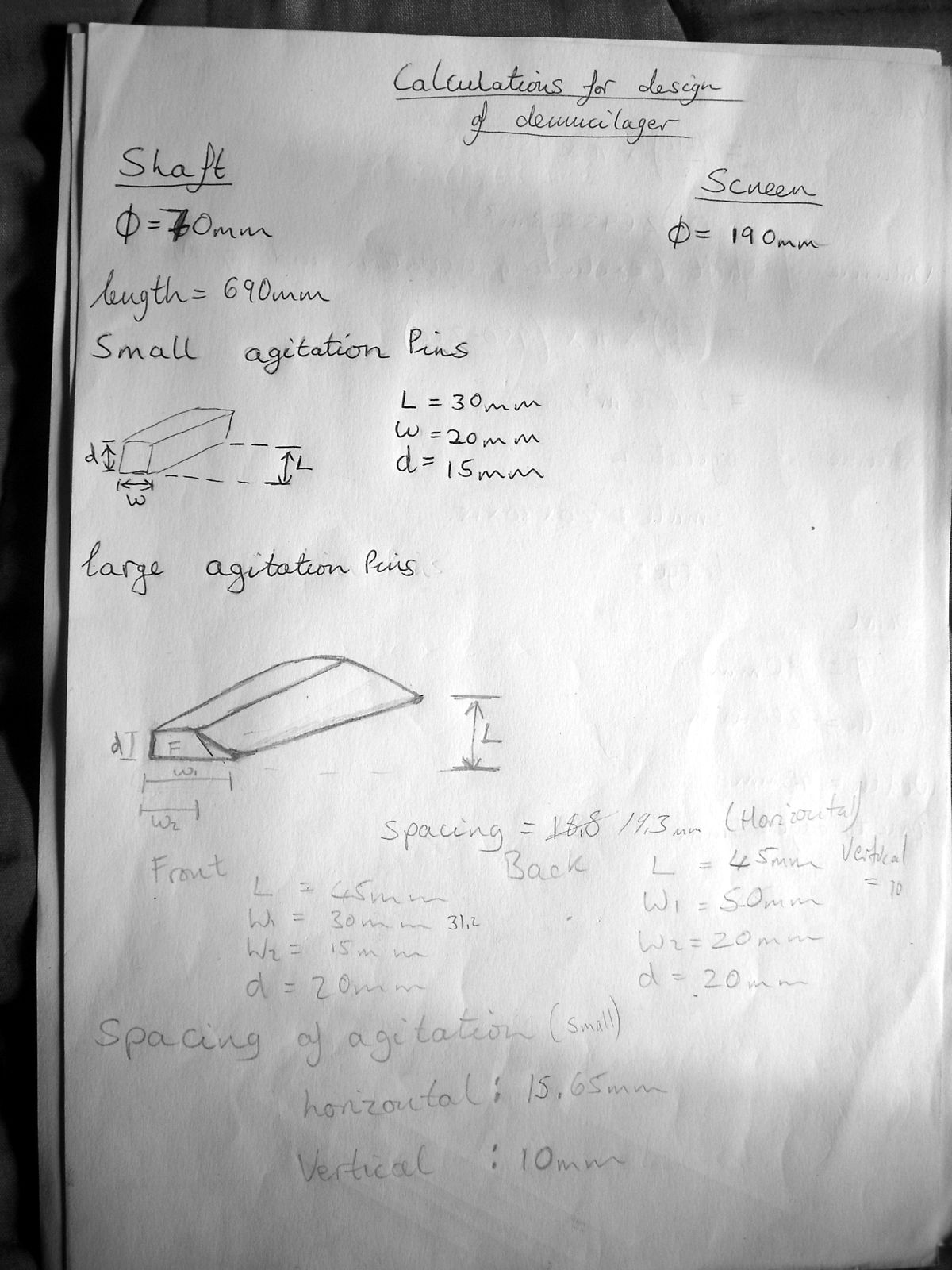
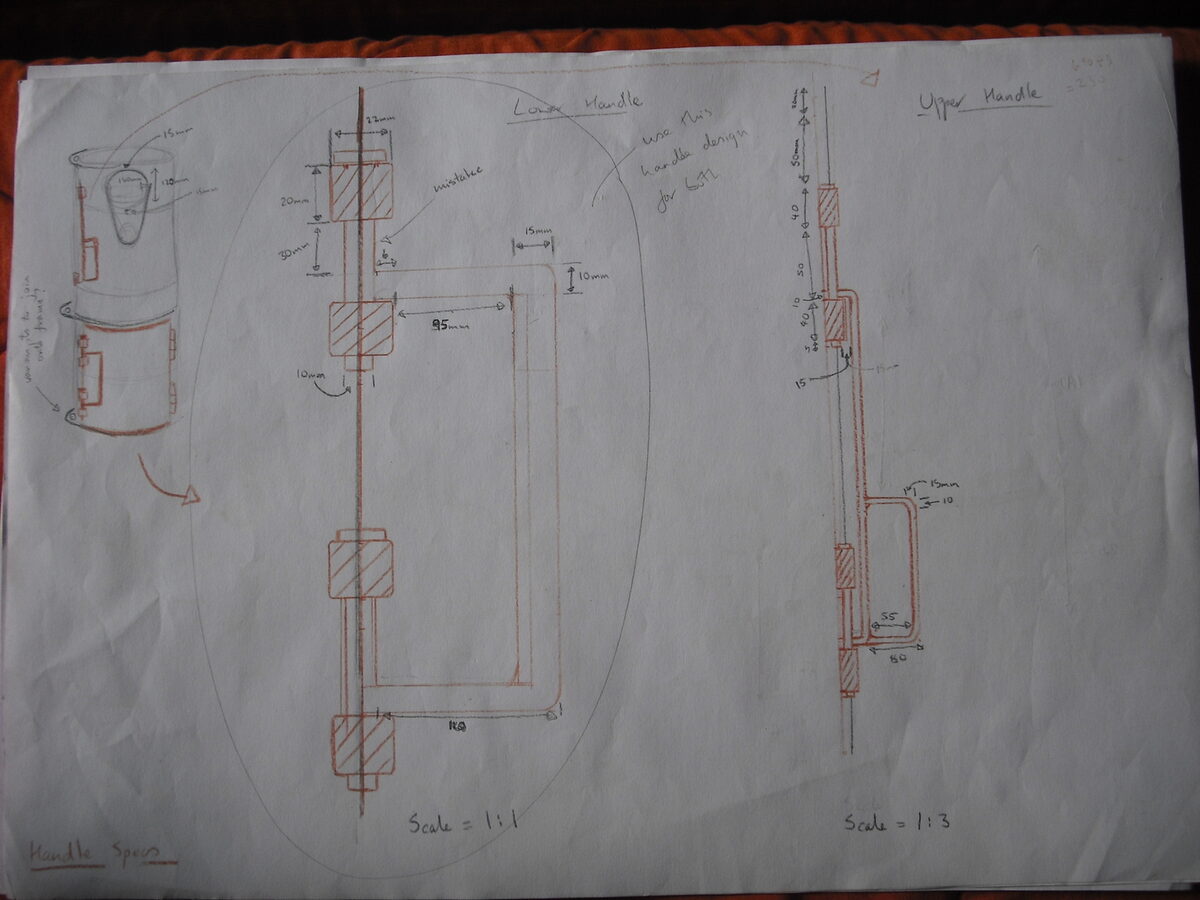
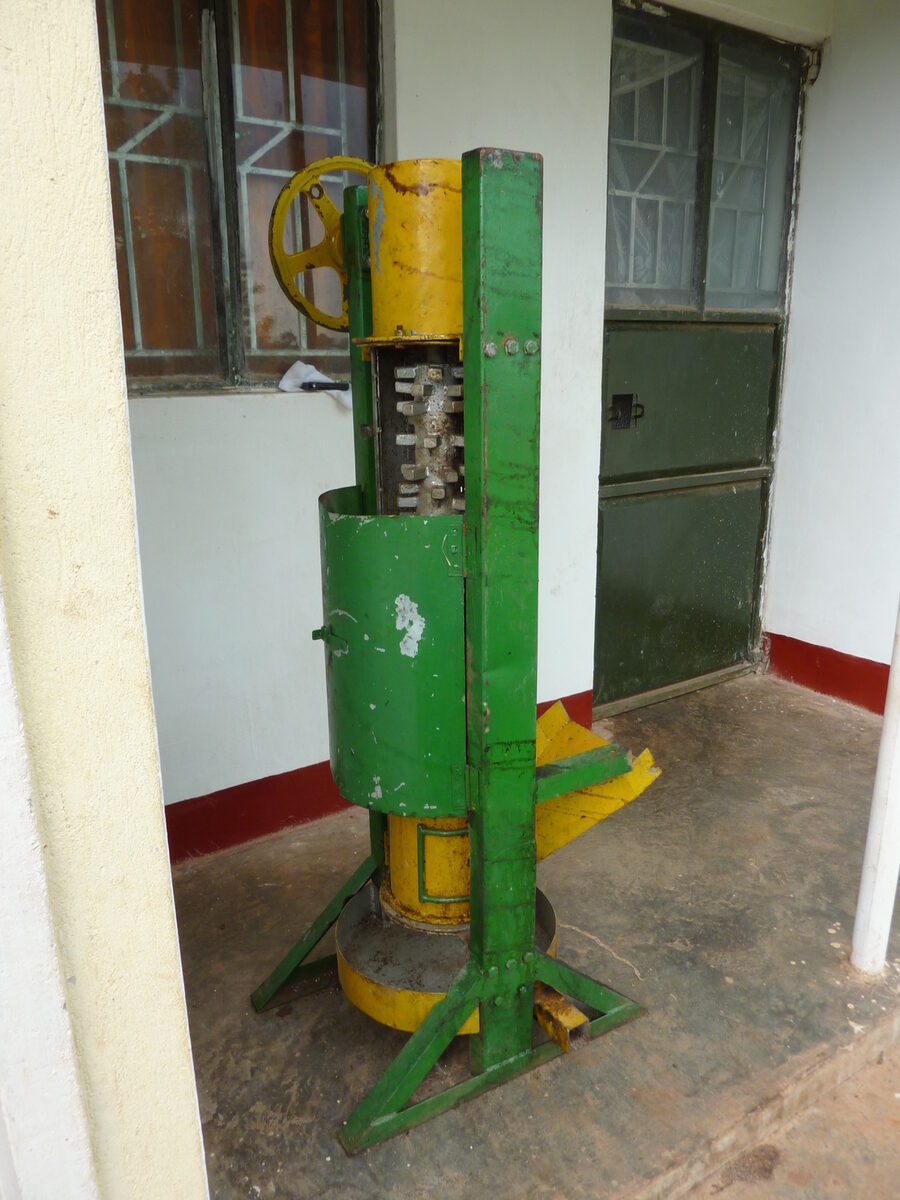
Under the pulp, each bean is coated in sticky mucilage that has to come off before drying. The 2011 volunteers built a machine to scrub it off: a hand-turned shaft carrying rows of pins inside a slotted steel screen. The beans rub against the pins, the screen and each other, and the mucilage leaves through the slots. The brief asked for parts that could all be "easily produced and maintained in Uganda".
EWB-UK placement proposals for RASD, 2010 to 2011 (as revised in July 2011) and 2011 to 2012. Volunteers' calculations and drawings. Photos, 28 June 2012.
A solar cabinet dryer
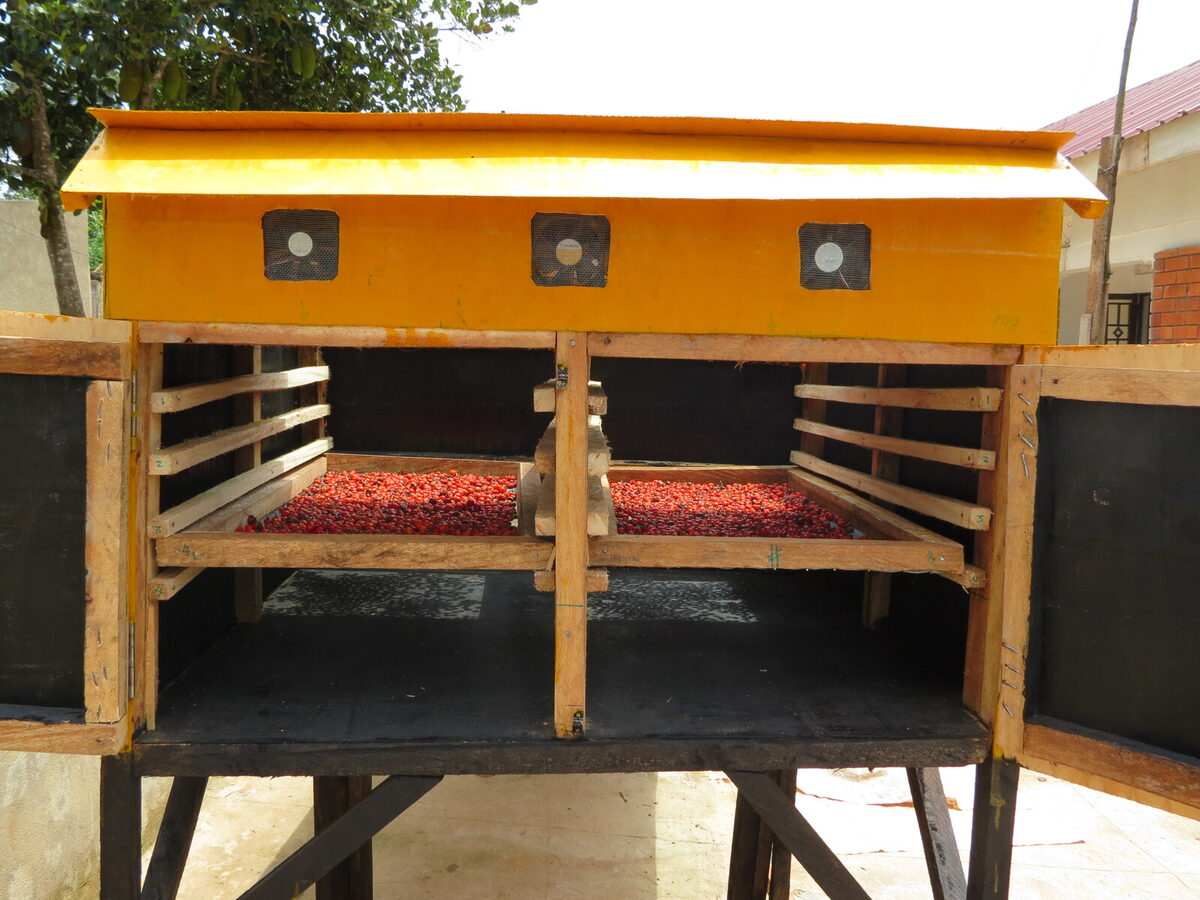
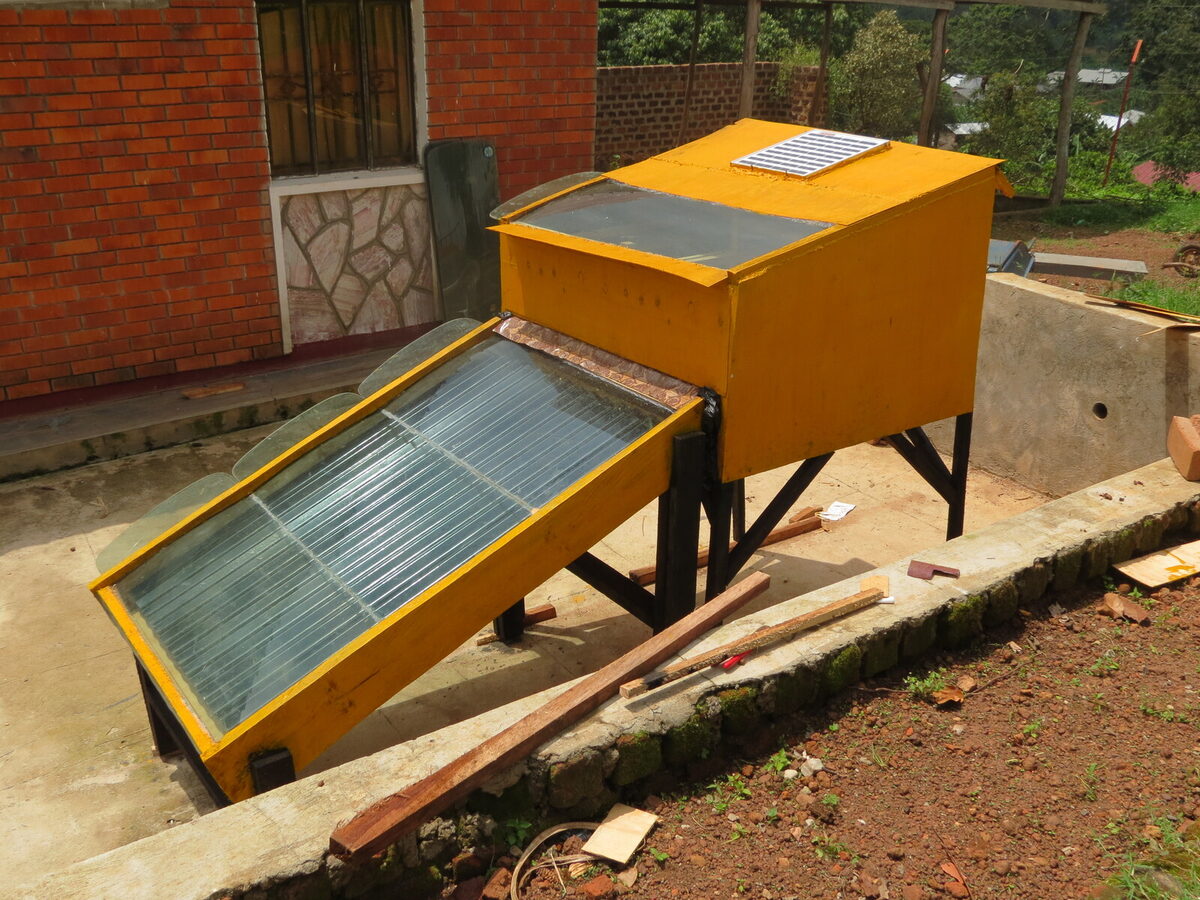
The clean wet beans, called parchment, still need drying. In 2012 the volunteers built a solar cabinet dryer: air warmed in a glazed collector is pushed by three fans, powered by a 10 W solar panel, up through trays in a plywood cabinet. It was designed for 30 kg of wet Robusta parchment a batch, from 53% down to 11% moisture, at no more than 60°C. It cost UGX 322,500, about €102, before transport and tools; the glass was cheap because it came from matatu minibus taxis.
"Design and Building of a Mixed-Mode, Forced Convection, Solar Dryer", EWB-UK 2012 project with RASD, 25 September 2012. Photos, 19 September 2012.
From sketch to machine
The volunteers worked on paper first. These are their calculations, drawings and sketches, next to what was built.
The demucilager
The dryer
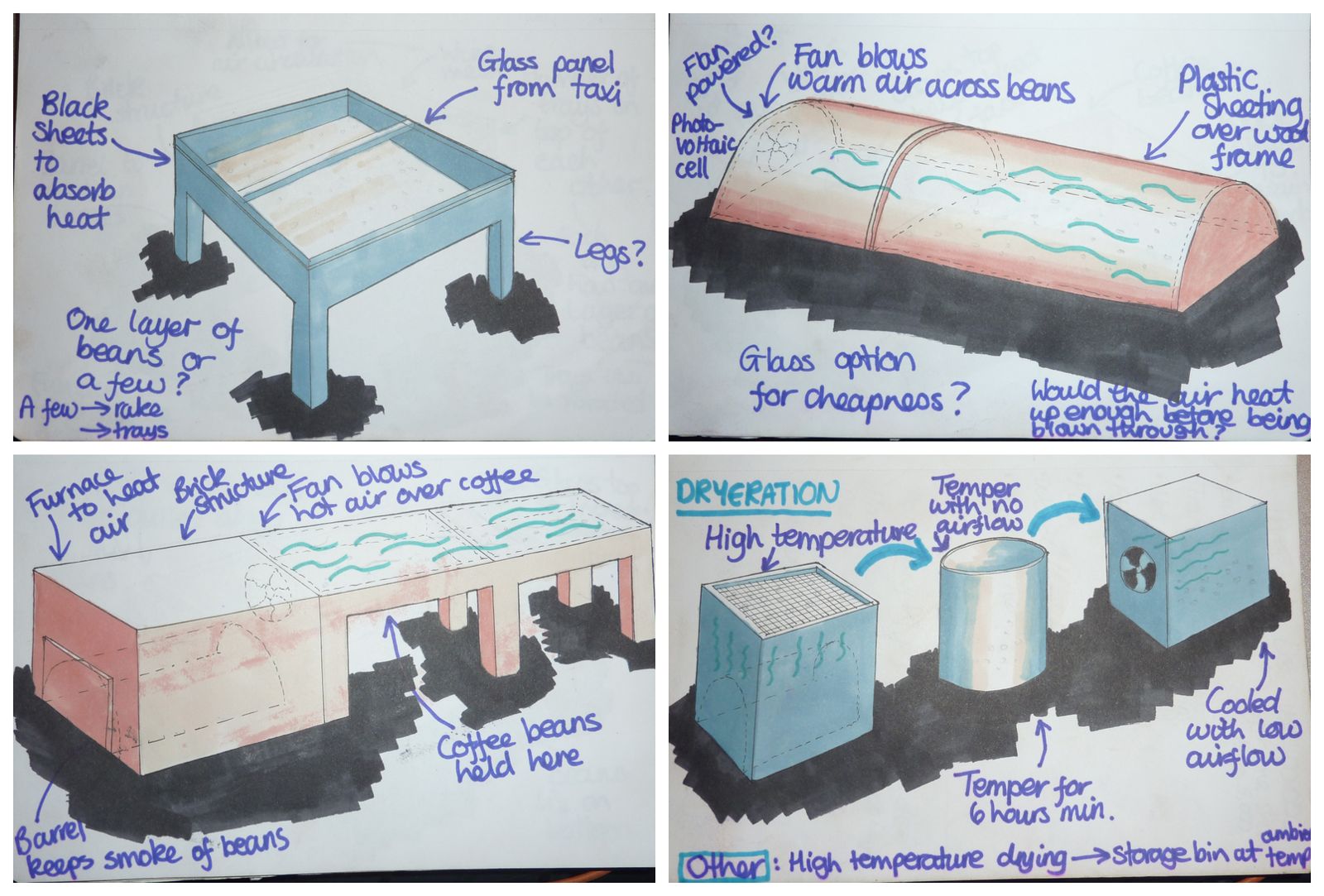
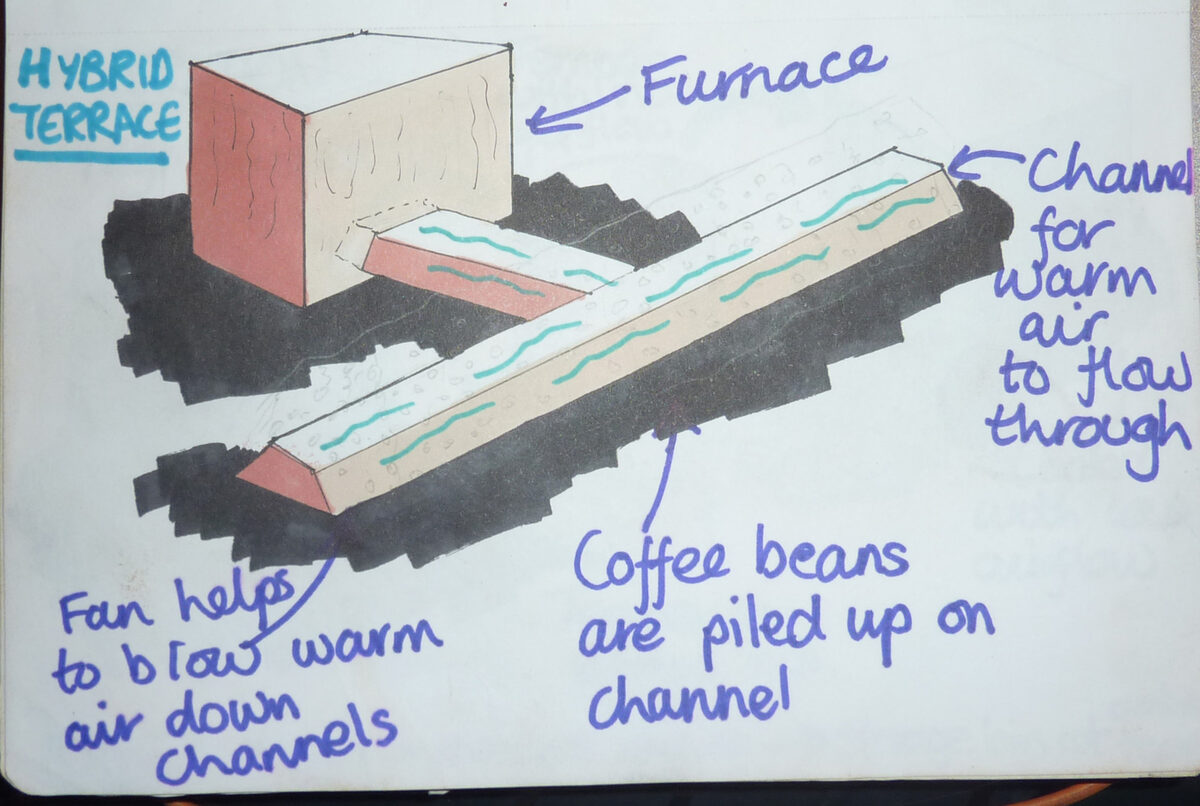
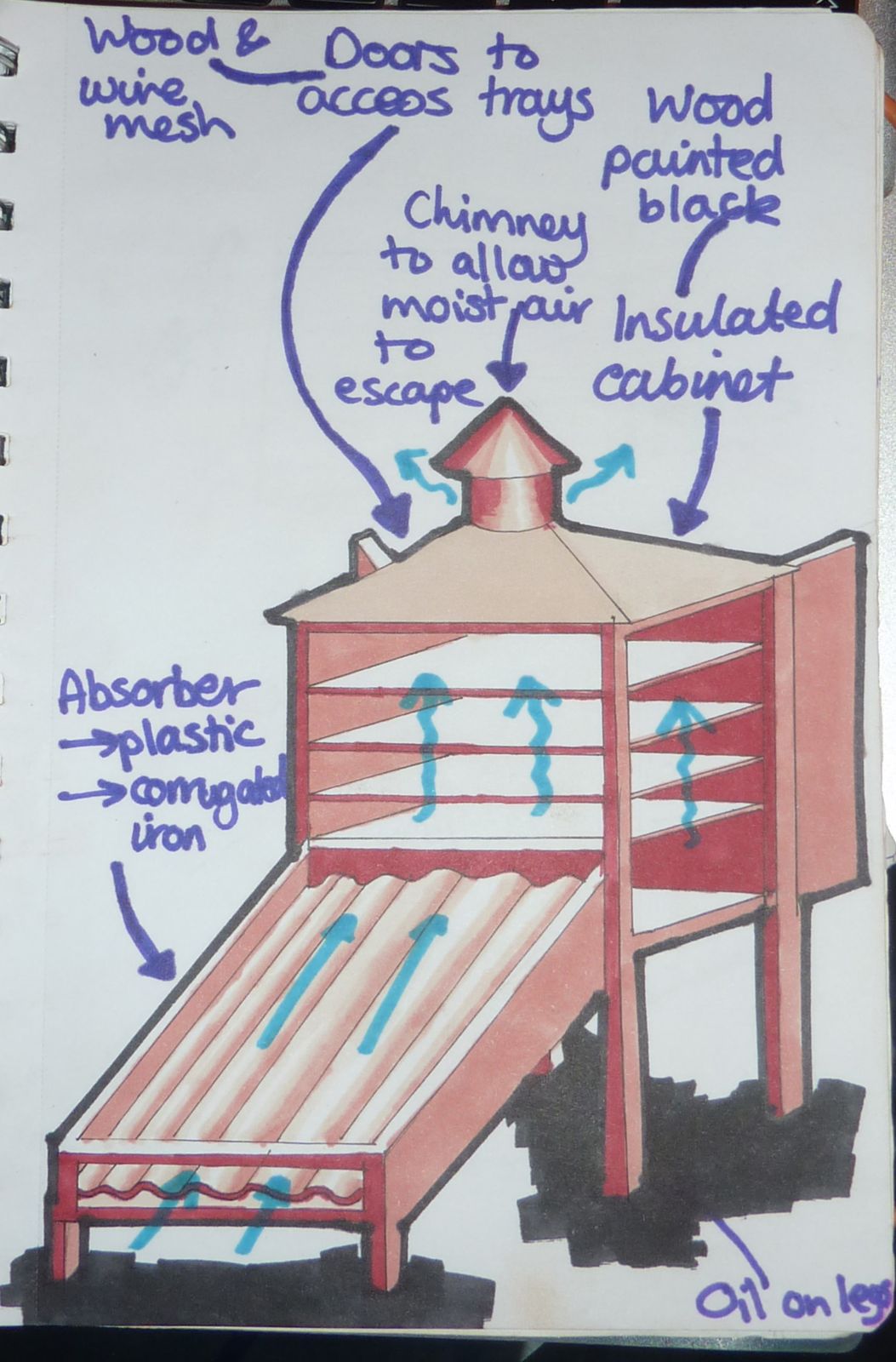
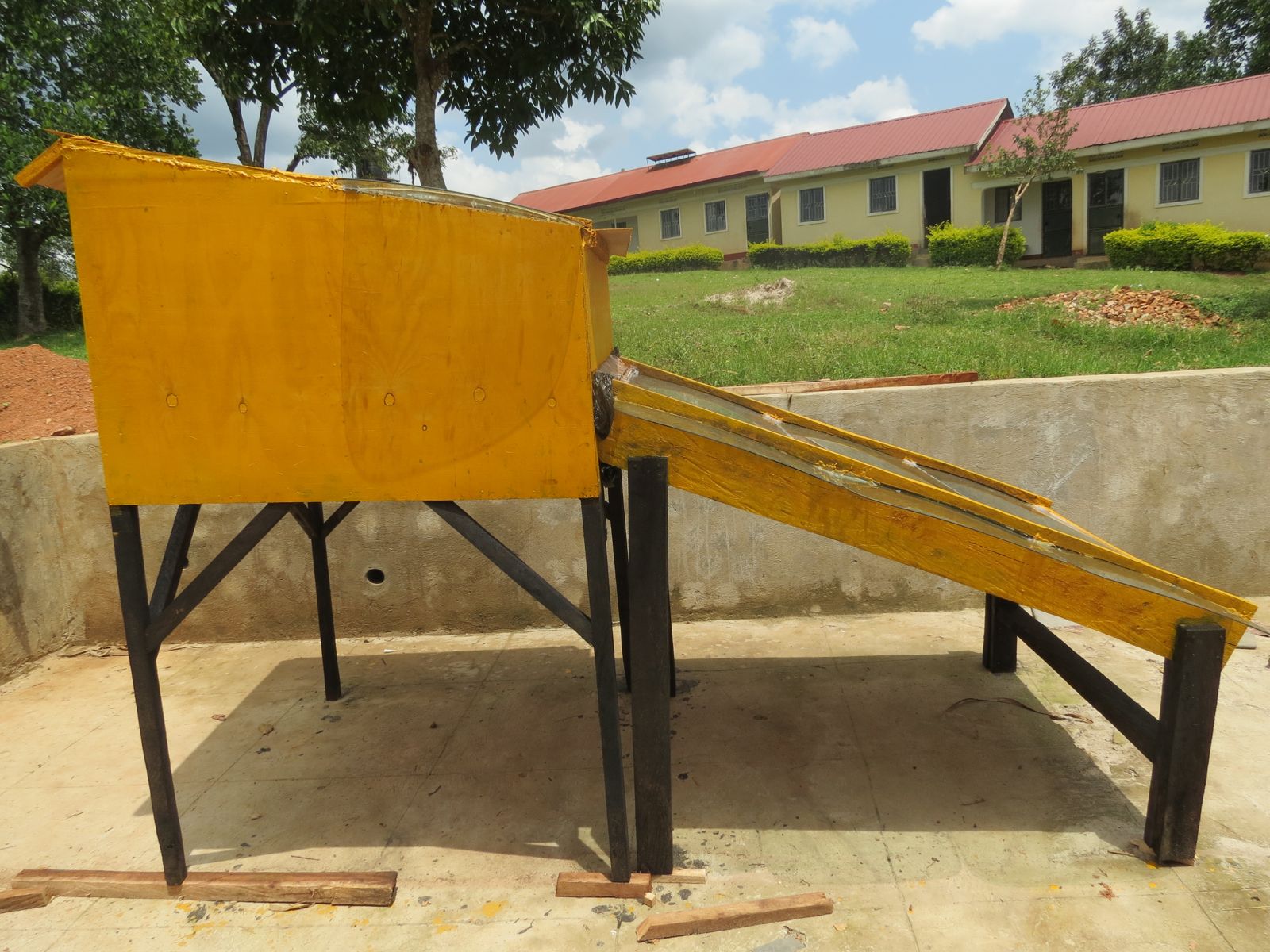
Designs and photos by the EWB-UK volunteers, from Lee's placement files (Drive folders "Demucilager plans" and "RASD 2012 Project"). Dates are camera dates; the design sheets carry none.
Four placements, and Lee's part in them
The proposal. On 8 December Lee wrote the first placement proposal for RASD: "Improving the income and livelihoods of coffee farmers in Mukono district while preserving the environmental services the land provides", starting with a demonstration plot "from seedling to post-harvest processing".
Study the farms. Two interns, in Nkokonjeru between August and December, did "in excess of 100 surveys with local farmers", asking among other things when and where they last sold kiboko. They worked with the exporter Kyagalanyi's farmer field schools, which gave training and cheaper inputs in return for a promise to sell to Kyagalanyi, at "a better price than the middlemen". They set up a scheme for tarpaulins "so the farmers could dry their coffee properly", held a meeting for 100 women coffee farmers with Café Africa, and started a demonstration coffee garden (below).
Design a machine. Two volunteers worked to a brief, revised in July 2011, for "village level wet processing stations" and "a small scale demucilage machine". They designed and built a hand-turned demucilager and began tests on pulping.
Fix it, and build a dryer. Three volunteers arrived outside the harvest, so nothing could be tested on coffee. Half the budget went on repairing the demucilager and the other half on the solar dryer, finished on 19 September. The brief had asked for a pulping attachment, a faster demucilager and the finished garden; it did not mention a dryer.
Plan a processing line. A six-month placement, July 2013 to January 2014, planned a wet-processing line at a coffee hub, fixes to the dryer and work on coffee wilt.
Placement manager, then finance coordinator
From November 2009 Lee was Engineers Without Borders UK's volunteer placement manager for RASD. EWB-UK's guide sets out the job: "prepare Placement Proposals, interview Placement Volunteer applicants, and monitor Volunteers whilst they are on their Placement". He wrote the proposals for 2010 and 2012 and, "with the leader of RASD", the one for 2011. EWB-UK's grants and about £600 from each volunteer covered travel and living costs, but EWB-UK paid "no project costs". For the 2012 interviews the panel's plan named Lee to write up the "record of decision reached and why for each candidate" and to give each candidate the decision. In November 2012 his own slide described him as "a placement manager for the RASD project in Uganda for the summers of 2010-2012".
That autumn EWB-UK's board heard he had been "recruited as our new Finance Co-ordinator", a volunteer role of about six hours a week for the whole charity, which he held until May 2013; the role's description put EWB-UK's turnover at "about £400,000". He checked and paid expense claims, approved in advance any unrestricted spending over £40, wrote the finance plan for 2013 to 2014 and was on the panel to interview candidates for a part-time finance administrator. Lee's 2009 proposal placed Nkokonjeru in Mukono District; it is now in Buikwe District. The designs, and every photo except the garden's, are the volunteers' work.
EWB-UK's guidelines for placement managers, 2011; placements strategy notes, January 2011; the 2012 interview plan; Lee's slide, November 2012; EWB-UK board highlights, October 2012; the Finance Co-ordinator role description; Finance Committee minutes, 19 November 2012.
A garden for farmers to copy
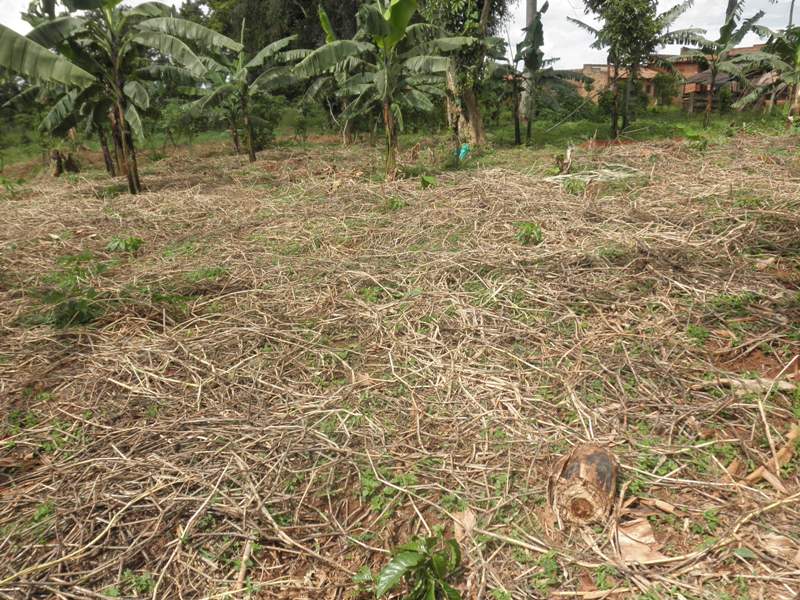
There was "not enough land at RASD", so the 2010 interns planted the demonstration plot on land a RASD volunteer donated, "on the road leading up to RASD": more than 70 coffee seedlings of five varieties, chosen "to provide resistance against Coffee Wilt Disease", in the shade of matoke. By May 2011 a sign at the garden thanked Engineers Without Borders UK. Lee's 2012 brief suggested one volunteer finish it "to provide a source of coffee plants to the local community as a 'mother garden'", and RASD's 2012 website listed it as one of two things done with EWB-UK, beside a "Coffee Processing Unit".
The 2010 interns' October update and November debrief; Lee's 2012 placement proposal; RASD's website, 2012. Photo from the "RASD Coffee Demo" file in Lee's EWB-UK folder, camera date 13 May 2011.
What it taught
No harvest, no test
The 2012 team arrived outside the coffee season, so the repaired demucilager could not be tried on coffee. The dryer was finished in September, and a 2013 note says it "has never been tested". The 2011 team had begun tests on pulping, and RASD's 2012 website said the prototype had "been used to process red cherries"; the results of those tests are not in Lee's files.
Build what can be fixed nearby
The brief asked for parts "easily produced and maintained in Uganda". The 2011 machine came out big and costly, and the 2012 team spent half its budget fixing it. The dryer reused glass from minibus taxis and cost about €102.
A machine needs a buyer
Better processing pays only if someone pays for the better bean. The FAO study found that careful picking adds cost "without any guarantee of getting a better sale price". A June 2011 concept note in Lee's files, written by someone else, argued that washed Robusta earns "a significant premium", but warned that "Exporters report difficulties in finding buyers who will pay premium prices for robusta, even if wet-processed." Its answer was washing centres "owned and managed by entrepreneurial women". In 2012 EWB-UK's chief executive wrote that the interns saw barriers "upstream" in growing coffee and "downstream" in reaching markets.
Disease can take the crop away
Coffee wilt had destroyed "over 50% of Robusta trees" in Uganda since 1993; by 2011 the World Bank said it was "now viewed as controlled", but warned it could "begin to spread again". The 2010 interns had already planted five varieties "to provide resistance against Coffee Wilt Disease". The 2013 plan added work on it, and a 2012 UC Davis seed grant, "Coffee Wilt and Ugandan Coffee Trade", backed by a letter from EWB-UK, took Lee back to Nkokonjeru for his PhD fieldwork, ending in a workshop at RASD in January 2014.
The thread, from Nkokonjeru to Wovoka
Where the work happened
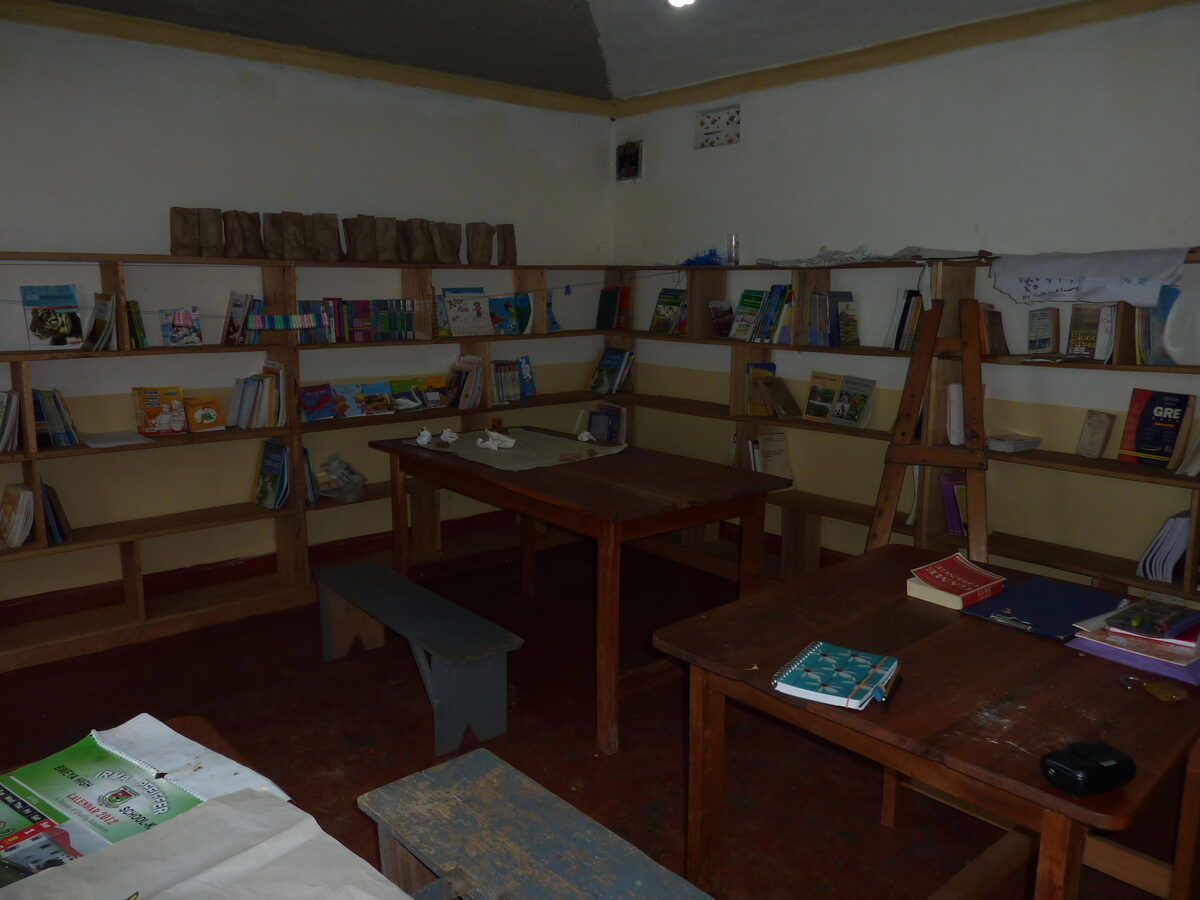
The volunteers worked from the RASD resource centre, whose main building Lee's Duke chapter helped finish in 2007, and took Luganda lessons in its library. Masipag Capital counts that centre as the first of its work centres: rooms beside crop processing that keep more of the value where the crop is grown.
- 2007
A nut sheller as a coffee pulper
On a Saxe internship at RASD, Lee found that a nut sheller "worked quite well at de-pulping coffee".
The first try at processing in the village.
- April 2009
Back in East Africa
After the Edinburgh MSc study tour in Kenya, Lee stayed on in East Africa and visited Ignitius Bwoogi of RASD in Nairobi. That December he wrote the first placement proposal.
The MSc showed where a crop's costs land.
- November 2012 to 2013
A washer for a village hub
From November 2012 RASD piloted wet processing with the farmers' union NUCAFE and Agriworks Uganda. Farmers pulp their cherries with hand pulpers in local trading centres and send the pulped coffee "in fermentation buckets to the central washing station" in Nkokonjeru, "a 10 minute walk from RASD". The plan was to put RASD's "prototype vertical washer", the EWB-UK demucilager, there. A November 2013 application in RASD's name, to a fund for projects "with a focus on the empowerment of women", asked for ponds to treat the washing water, five more demucilage machines for village centres and a workshop for 100 farmers. The files do not show whether it was funded.
Pulp near the farm, wash at a shared hub.
- 2012 to 2014
Coffee wilt and the PhD
With Dr. Neil McRoberts of UC Davis, Lee's MSc supervisor, a seed grant paid for surveys of 119 coffee growers and 89 traders in Buikwe and Kayunga districts, 31 more growers at a workshop in Kamuli, and a workshop at RASD for 98 farmers and traders on 11 January 2014.
Why farmers hold back: risk, disease and markets.
- 2014
A risk simulator for coffee farms
With CABI and the Hanns R. Neumann Stiftung, Lee built a stochastic risk simulator for the cash flow of coffee farms.
Put numbers on the risk before asking a farmer to take it.
- 2022 to now
Wovoka
RASD is Wovoka's partner in Uganda, in Buikwe District, which includes Nkokonjeru. Buji Coffee, washed Robusta from a community-owned processing centre in Buikwe, is at the scoping stage. In Lee's words, much of what Wovoka is doing now in Mindoro, in the Philippines, is inspired by this work in Uganda.
From Nkokonjeru: put the processing, and the value, next to the farm.